

Where to put the empty oil cans?

What you should know as a consumer

Certain empty sales packaging is subject to statutory take back obligations. If the packaging comes from products of GVÖ licence partners, identifiable by the GVÖ logo on the packaging, GVÖ organises its take back and recovery by certified specialist companies.

Attention:
Packaging does NOT belong in the yellow bag!

Don’t throw packaging into the yellow bag or the yellow bin or into the household waste after use! This is because the remaining oil in the packaging pollutes the environment if disposed of improperly.

What happens to the collected oil packaging?

Frequently asked questions

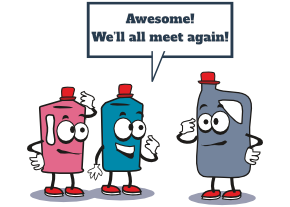
GVÖ Gebinde: Awesome! We'll all meet again!
  1. I have an oil can. How do I dispose of the oil can?

    As a general rule, return empty containers undamaged and securely closed to the place where they were purchased.
    Never dispose of used oil containers in the yellow recycling bag, the yellow recycling bin or with household waste. Residual oil may contaminate soil and water if the containers are not disposed of properly.
    Retail outlets selling products from GVÖ licence partners accept empty containers free of charge and pass them on to GVÖ. GVÖ then arranges for the containers to be sent for recovery to certified specialist companies.
    Recoverable materials are recovered and used as raw materials for new products.

  2. Can I dispose of oil packaging in the residual waste?

    Absolutely not! Return empty containers undamaged and securely closed to the place where they were purchased.
    Empty oil containers must not be disposed of with household waste or in the yellow recycling bag or yellow recycling bin. Residual oil may contaminate soil and water if the containers are not disposed of properly.
    Retail outlets selling products from GVÖ licence partners accept empty containers free of charge, regardless of brand, and pass them on to GVÖ.
    GVÖ then arranges for the containers to be sent for recovery to certified waste management companies.

  3. Can I hand in an oil package that still contains a rest of oil?

    Anyone who sells oil is also obliged to accept used oil. The easiest way to return used oil is to take it to the workshop, hardware store or petrol station where you bought it.

  4. Where can I return the empty oil packaging if I no longer know where it was purchased?

    Every sales outlet must take back the empty oil packaging.

  5. Where to put empty oil canisters?

    As a general rule, return empty containers undamaged and securely closed to the place where they were purchased.

    Never dispose of used oil containers in the yellow recycling bag, the yellow recycling bin or with household waste. Residual oil may contaminate soil and water if disposed of improperly.

    Retail outlets selling products from GVÖ licence partners accept empty containers free of charge and pass them on to GVÖ. GVÖ then organises recovery at certified waste management facilities.

  6. What happens to the oil packaging that has been collected?

    GVÖ organises the recovery of the returned containers at certified specialist facilities. The plastic is processed into granulate, which can be used as a raw material for new products.

  7. Why does GVÖ collect empty oil containers? What is the objective?

    Certain sales packaging is subject to statutory take back and recovery obligations. GVÖ was founded by the mineral oil industry to jointly organise the take back and recovery of its packaging.

    The aim is to collect as many used, completely emptied oil containers as possible and send them for recovery. The collected containers are processed, and the recovered material is used as a raw material for new plastic or steel products.

    In this way, used containers provide material for new products.

  8. What does the processing procedure involve?

    At our processing facilities, the collected, fully emptied containers of various sizes are shredded, thoroughly cleaned and ground. The resulting material can then be used as a secondary raw material for the production of new products.

  9. What products can the recycled material be used for?

    The processed material can be used, for example, to manufacture wastewater pipes, conduits, cable sheathing, spacers, grass grid panels and green roof panels. In these applications, the recycled material can be used as an alternative to virgin plastic.